Case study
L'Oréal: A House of Brands, In-Game
CeraVe and Garnier ran as separate market lines inside Morl's 9M-player flagship title, delivering 103,830 reported impressions.

103K+
Reported impressions
9.0M+
Monthly active players
3
Campaign lines delivered
Client Challenge
L'Oréal doesn't market as one brand. It markets as a house of them — each with its own audience, its own positioning and its own regional priorities. CeraVe and Garnier were being planned as distinct campaigns, in distinct markets, against distinct objectives.
Gaming should have been an obvious channel. In practice it kept breaking down at the planning stage. Most in-game inventory is sold as a single placement in a single environment: one brand, one creative, one audience, one number at the end. Running two brands across separate markets meant either fragmenting the buy across multiple platforms and losing all comparability, or picking one brand and shelving the other.
There was a second problem. The formats on offer were interruptive by design — pre-rolls, interstitials, skippable units. For a beauty portfolio built on trust and considered purchase, being the thing a player is waiting to dismiss is not a neutral placement. It is an actively negative one.
What L'Oréal needed was a single environment with enough scale to hold two brands without them colliding, native formats that didn't trade on interruption, and reporting clean enough to read each brand and each market on its own terms.
Campaign Objective
- Deliver CeraVe and Garnier as independent campaign lines inside one host title, without the two brands competing for the same attention
- Reach a female-skewed audience at scale in a gaming environment — 36.3% of Find Who Slapped's 9M players
- Activate across three separate market lines spanning two territories
- Use native in-world formats only — no pre-roll, no interstitial, no skippable inventory
- Return per-brand, per-market impression reporting that stands up next to the rest of the media plan
Execution
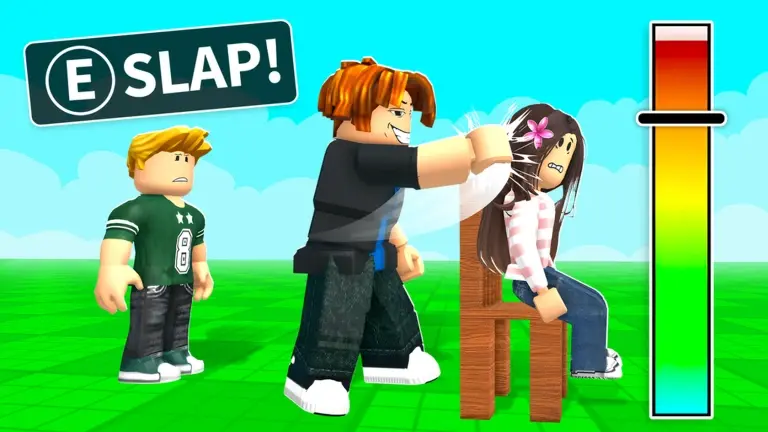
The host title. Find Who Slapped is Morl's flagship: 9,015,159 monthly active players across 100+ countries, 36.3% of them female, with English, Spanish and Portuguese leading. It is the broadest audience in our portfolio — and that breadth is precisely what made a multi-brand, multi-market split viable inside a single game rather than across three separate buys.
The integration. Rather than one placement carrying both brands, we built three discrete campaign lines into the arena environment. CeraVe and Garnier each received their own in-world assets, placed in the spaces players already move through during a session — walls, props and environment surfaces inside the arena itself. Sponsored rewards tied brand presence to something the player actually wanted, so exposure became a moment of value rather than a toll.
Every asset was built in-engine by the same development team that builds and maintains the game. Nothing was licensed in, retrofitted or served from a third-party ad network — which is why the placements read as part of the world instead of on top of it.
Market targeting. Campaign lines ran to their own territories: CeraVe in Germany, CeraVe in SA, and Garnier in SA. Each was scoped, launched and measured independently.
Live ops and reporting. The integration ran as a live product inside an active title, not as a fixed-duration flight bolted on to it. Impressions were counted in-title and reported brand by brand, market by market — so CeraVe DE could be read against CeraVe SA, and Garnier assessed on its own performance rather than absorbed into a group average.